
African pastoralist women push for stronger role in climate, land debates
Shatu said in countries such as Cameroon, Benin and the Central African Republic, transhumance plays an important role in sustaining pastoral livelihoods and maintaining livestock productivity.
A section of African pastoralist women attending the conference in Kampala-Miunyonyo. (Photo by Olandason Wanyama)
_________________
African women pastoralists have been urged to strengthen the sustainability of pastoralism across the continent through coordinated action at local, national and regional levels.
Ali Aii Shatu, a gender and women coordinator in Cameroon, said key priorities include strengthening the implementation of the N’Djamena Declaration, improving cross-border governance of transhumance, and investing in pastoral infrastructure and services.
She also emphasised the need to promote inclusive dialogue mechanisms where women actively participate, as well as support livelihood diversification and value addition in pastoral economies.
Addressing a gathering of pastoralist women at Speke Resort Munyonyo on March 16, 2026, Shatu appealed to African governments to prioritise actions that improve the resilience of pastoral communities.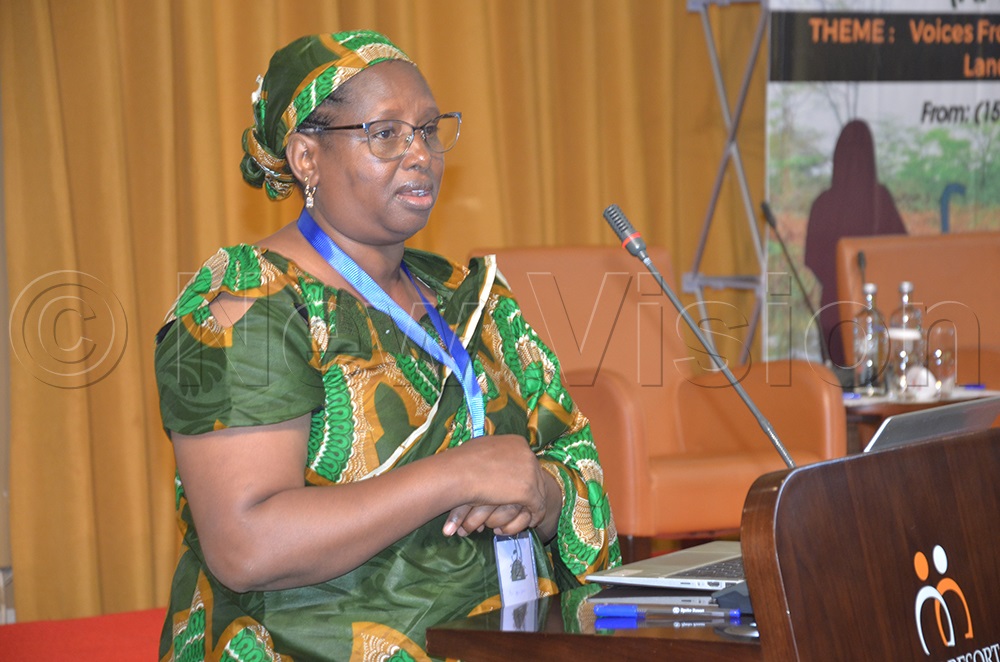
Ali Aii Shatu, Gender and Women Coordinator, Cameroon, presenting at the African Pastoralism Women's Gathering held at Munyonyo, Kampala. (Photo by Olandason Wanyama)
“We need to promote peaceful co-existence between pastoralists and farmers across the continent and specifically Central Africa,” she noted.
Shatu said in countries such as Cameroon, Benin and the Central African Republic, transhumance plays an important role in sustaining pastoral livelihoods and maintaining livestock productivity.
“Pastoralism contributes significantly to rural economies, livestock trade, and food security in Africa,” she noted, adding that it also supports local markets and provides livelihoods for a large proportion of rural populations.
A veterinarian by profession, Shatu said pastoralism remains a critical livelihood across livestock-keeping countries in Africa, supporting millions of people who depend on livestock such as cattle, sheep and goats for food, income and cultural identity.
However, she noted that pastoral systems are increasingly under pressure due to multiple factors, including competition over natural resources, climate change, population growth and growing insecurity in pastoral regions.
Shatu added that these pressures threaten the sustainability of pastoral mobility and the resilience of pastoral communities.
Yergalem Taages Beraaki, the Food and Agriculture Organisation representative in Uganda, said pastoralist women are not only part of the system but its backbone.
“Across the continent, women care for livestock, manage milk production, preserve breeds, traditional knowledge, sustain families even in the harshest climatic conditions," he said.
![Kenyan women leaders, [L-R] Luijah Lesuuda and Jacckline Merinyi at the African pastoralists women gathering in Kampala, March 16, 2026. (Photo by Olandason Wanyama)](https://newvision-media.s3.amazonaws.com/cms/504956fa-8805-4163-8b60-d70ddbe15c23.jpg)
Kenyan women leaders, [L-R] Luijah Lesuuda and Jacckline Merinyi at the African pastoralists women gathering in Kampala, March 16, 2026. (Photo by Olandason Wanyama)
Beraaki said more than 500 million people globally depend directly on pastoralism for their livelihoods, while value chains linked to pastoral systems support the food security of over 1.3 billion people worldwide.
He added that in East Africa and the Horn of Africa, pastoralists produce up to 90 percent of the meat consumed in the region.
Beraaki also noted that pastoralism supports over 200 million people on the African continent, stressing that it is more than just a way of life.
“It’s an economic system, a climate adaptation strategy and a vital pillar for food security,” he said in a statement to the six-day gathering at Speke Resort Munyonyo in Kampala.
The conference has drawn participants from North West, Central and East Africa, while Southern Africa is following proceedings online.
The theme, "Voices from the Rangelands: African Pastoralist Women Rising for Land Rights, Climate Justice, Equity, and Peace", comes at a time when the world is gearing up to celebrate the International Year of Rangelands and Pastoralists.